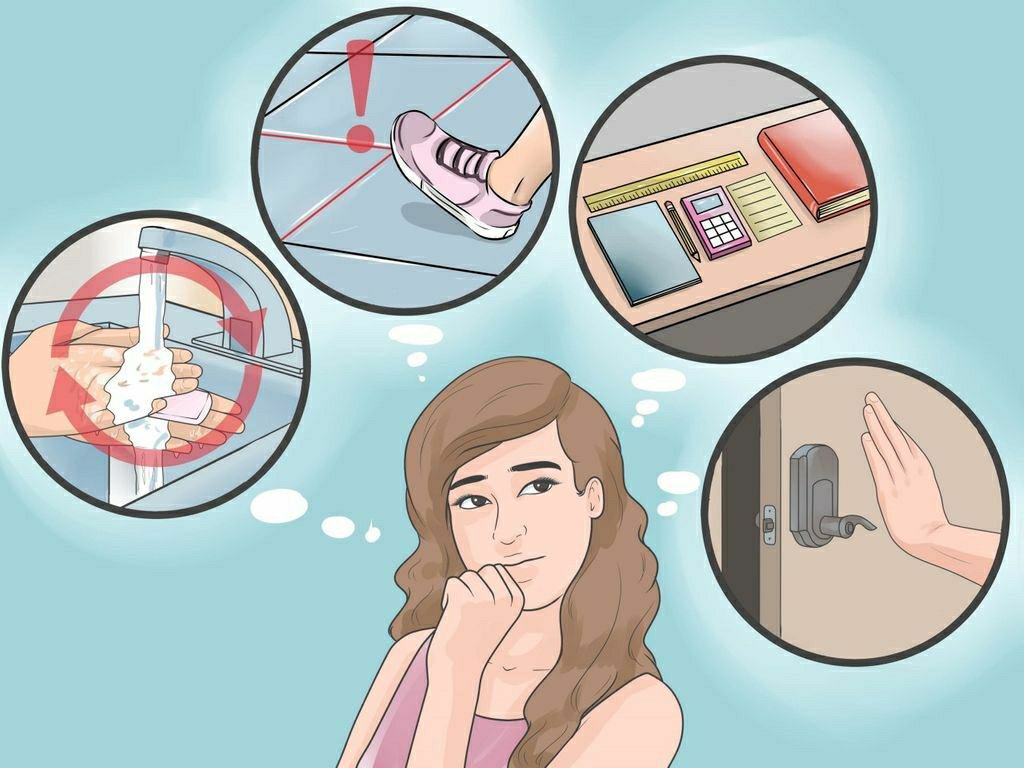
Obsessive-compulsive disorder (OCD) is a disorder in which people have recurring, unwanted thoughts, ideas or sensations (obsessions) that make them feel driven to do something repetitively (compulsions). The repetitive behaviours, such as hand washing, checking on things or cleaning, can significantly interfere with a person’s daily activities and social interactions.
Obsessions
Obsessions are recurrent and persistent thoughts, impulses, or images that cause distressing emotions such as anxiety or disgust. Many people with OCD recognize that the thoughts, impulses, or images are a product of their mind and are excessive or unreasonable. However, the distress caused by these intrusive thoughts cannot be resolved by logic or reasoning. Most people with OCD try to ease the distress of the obsessions with compulsions, ignore or suppress the obsessions, or distract themselves with other activities.Typical obsessions:
- Fear of getting contaminated by people or the environment
- Disturbing sexual thoughts or images
- Fear of blurting out obscenities or insults
- Extreme concern with order, symmetry, or precision
- Recurrent intrusive thoughts of sounds, images, words, or numbers
- Fear of losing or discarding something important
Compulsions
Compulsions are repetitive behaviors or mental acts that a person feels driven to perform in response to an obsession. The behaviors typically prevent or reduce a person’s distress related to an obsession. Compulsions may be excessive responses that are directly relate to an obsession (such as excessive hand washing due to the fear of contamination) or actions that are completely unrelated to the obsession. In the most severe cases, a constant repetition of rituals may fill the day, making a normal routine impossible.Typical compulsions:
- Excessive or ritualized hand washing, showering, brushing teeth, or toileting
- Repeated cleaning of household objects
- Ordering or arranging things in a particular way
- Repeatedly checking locks, switches, or appliances
- Constantly seeking approval or reassurance
- Repeated counting to a certain number
Treatment at home
. Always expect the unexpected
. Be willing to accept risk.
. Never seek reassurance from yourself or others.
. Always try hard to agree with all obsessive thoughts
. Don’t waste time trying to prevent or not think your thoughts
. Try to not be a black-and-white, all-or-nothing thinker
. Remember that dealing with your symptoms is your responsibility alone
. Don’t get too impatient with your progress, or compare yourself to someone else.
. When you have a choice, always go toward the anxiety, never away from it.
.When faced with two possible choices of what to confront, choose the more difficult of the two whenever possible.
. Review your therapy homework assignments daily
. Don’t be side-tracked by perfectionism.

 KNOW YOUR WORLD